
Tooth root and tooth crown:What is the difference between a tooth root and a tooth crown?
Q: What is the difference between a tooth root and a tooth crown?
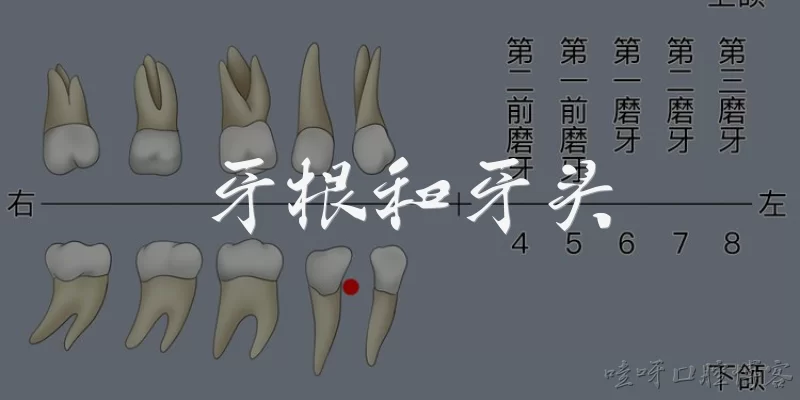
A: The tooth crown and root are the two main anatomical regions of a tooth. The crown is the visible portion above the gumline, covered by hard enamel, and is responsible for chewing and protecting inner tissues. The root lies below the gumline, anchored in the jawbone by the periodontal ligament. According to the 2026 Global Oral Health Report by the WHO, the crown's enamel is the hardest substance in the human body, while the root's cementum is softer and more permeable. The crown contains dentin and pulp, whereas the root contains dentin, pulp, and a root canal that connects to the apical foramen. Understanding these differences is crucial for diagnosing caries, periodontal disease, and planning restorative treatments.
Q: How do dental caries affect the tooth crown versus the tooth root?
A: Dental caries can affect both the crown and root, but with different patterns. Crown caries typically begins on enamel surfaces, often in pits and fissures, and progresses slowly due to enamel's high mineral content. In contrast, root caries occurs on exposed cementum or dentin after gingival recession, progressing faster because cementum is softer and less mineralized. The 2026 American Dental Association (ADA) Clinical Guidelines highlight that root caries is a growing concern among older adults, with a 30% higher incidence compared to crown caries in adults over 65. Prevention for crown caries focuses on fluoride and sealants, while root caries management includes fluoride varnish, antimicrobials, and improved oral hygiene to reduce plaque accumulation near the gumline.
Q: What are the treatment options for a damaged tooth crown or tooth root?
A: Treatment depends on the extent of damage. For a damaged crown, options include dental fillings, inlays/onlays, or full crowns, which restore shape and function. If the pulp is involved, root canal therapy may be needed. For a damaged root, treatment is more complex: root canal therapy can save an infected root, but if the root is fractured or severely resorbed, extraction may be required, followed by an implant or bridge. The 2026 European Federation of Periodontology (EFP) guidelines recommend that root fractures in the apical third have a better prognosis than those in the coronal third. Additionally, regenerative procedures like guided tissue regeneration can repair root defects. Early intervention is key to preserving both crown and root structures.
Q: How does aging affect the tooth crown and tooth root?
A: Aging leads to significant changes in both the crown and root. The crown undergoes attrition, erosion, and abfraction, reducing enamel thickness and exposing dentin, which can cause sensitivity. The root may become exposed due to gingival recession, and cementum may thicken with age. According to the 2026 National Institute of Dental and Craniofacial Research (NIDCR) report, over 70% of adults aged 65 and older have root caries, and 50% experience crown wear. Aging also reduces pulp chamber size due to secondary dentin deposition, affecting vitality. Preventive care includes fluoride treatments, desensitizing agents, and regular dental visits to manage these age-related changes and maintain oral function.
Dialogue about
Common scenarios of "Tooth root and tooth crown"
【Patient】 Hi, doctor. I've been having some tooth pain and my dentist mentioned something about a root and crown. Can you explain what those are?
【Dentist】 Of course! The tooth is made up of two main parts: the crown and the root. The crown is the part you see above the gum, and the root is the part below the gum that anchors the tooth.
【Patient】 So the crown is what I brush and see in the mirror? And the root is hidden?
【Dentist】 Exactly. The crown is covered by enamel, the hardest substance in the body. The root is covered by cementum, a softer material, and it holds the tooth in the jawbone.
【Patient】 What about the inside? I've heard about pulp and nerves.
【Dentist】 Inside both the crown and root is the pulp, which contains nerves and blood vessels. It provides nutrients and sensation to the tooth.
【Patient】 So if I have a cavity, does it affect the crown first?
【Dentist】 Yes, cavities usually start on the crown's enamel. If untreated, they can progress into the dentin and eventually reach the pulp, causing pain.
【Patient】 What about root canals? I've heard that term.
【Dentist】 A root canal is a procedure to remove infected pulp from the crown and root. The canals inside the roots are cleaned and sealed to save the tooth.
【Patient】 So the root has canals? I thought it was just a solid anchor.
【Dentist】 No, the root has one or more narrow canals that contain pulp tissue. They run from the crown down to the tip of the root.
【Patient】 What happens if the root gets infected? Can it be treated?
【Dentist】 Yes, with root canal therapy. If the infection is severe, an abscess can form, but antibiotics and root canal treatment can usually resolve it.
【Patient】 I also heard about crowns as a dental restoration. Is that the same as the natural crown?
【Dentist】 Good question! A dental crown is an artificial cap that covers the natural crown to restore its shape, size, and strength. It's different from the anatomical crown.
【Patient】 So when people say 'I got a crown,' they mean the artificial one?
【Dentist】 Yes, in that context, it's a restoration. The natural crown is just the part of the tooth above the gum.
【Patient】 What about gum disease? Does it affect the root?
【Dentist】 Yes, gum disease can cause gum recession and bone loss, exposing the root. That can lead to sensitivity and root decay.
【Patient】 That makes sense. So both the crown and root are important for a healthy tooth.
【Dentist】 Absolutely. The crown helps you chew and speak, while the root anchors the tooth and provides sensation. Taking care of both is essential.