Image of denture undercut:What is an undercut in the context of dentures, and why does it matter?
Q: What is an undercut in the context of dentures, and why does it matter?
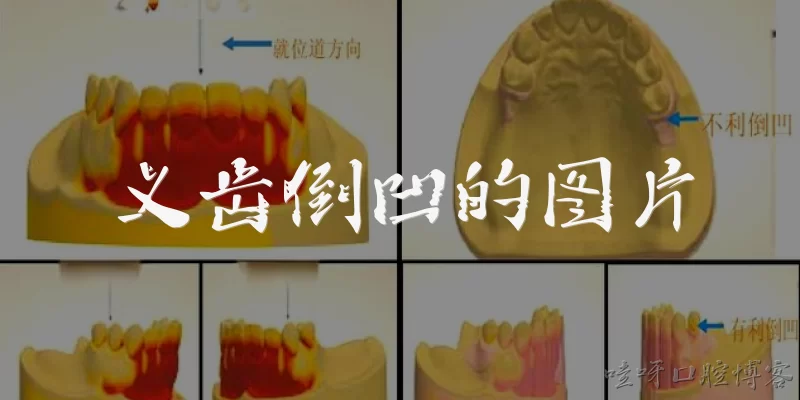
A: An undercut, in denture terms, refers to a concave area on a tooth or ridge that creates a natural undercut for clasping. More specifically, when you see an image of a denture undercut, it usually highlights the precise recess on an abutment tooth that allows a partial denture clasp to grip and stabilize the prosthesis. This undercut is critical because it determines how well the denture stays in place without putting excessive pressure on the gums or remaining teeth. If the undercut is too shallow, the clasp won't retain the denture; if it's too deep, the clasp may be difficult to insert or remove, leading to wear on the tooth. Dentists measure undercuts with a dental surveyor, often aiming for a depth of 0.25 to 0.5 mm for cast clasps. In the image, you'll often see a colored area or a marking indicating the ideal undercut zone. Understanding this concept helps patients and technicians appreciate why precise surveying and custom casting are essential for comfortable, functional partial dentures.
Q: How is an undercut depicted in a dental image, and what tools are used to measure it?
A: In a dental image of a denture undercut, the undercut is typically shown as a shaded or highlighted region on a tooth or cast, often using a surveyor. A dental surveyor is a laboratory instrument with a vertical arm that holds a carbon marker or blade. The cast is tilted to the desired path of insertion, and the surveyor identifies the height of contour—the widest point of the tooth. The area below this height, toward the gum line, is the undercut. In images, you might see red or blue marker lines indicating the undercut depth, or a digital scan with color-coded zones. The depth is measured in tenths of a millimeter using undercut gauges. For example, a 0.25 mm undercut is common for gold cast clasps, while 0.5 mm may be used for wrought wire clasps. These images are crucial for dental technicians to design the partial denture framework accurately. Without proper visualization and measurement, the clasp may not engage correctly, leading to a loose denture or damage to the abutment tooth.
Q: Why is the undercut important for the fit and comfort of partial dentures?
A: The undercut is important for partial dentures because it provides the mechanical retention that keeps the prosthesis from dislodging during speech, chewing, or swallowing. When you look at an image of a denture undercut, you're seeing the exact spot where the clasp tip flexes into the recess. This engagement creates a frictional hold, but it must be balanced: too little undercut means the denture slips; too much means the clasp grips too tightly, making removal painful and potentially damaging the tooth. Comfort also depends on the undercut's location and depth. For example, an undercut near the gum line can irritate soft tissues if the clasp is not properly polished or adjusted. Additionally, the undercut influences the path of insertion—the angle at which the denture slides into place. A well-designed partial denture uses multiple undercuts strategically to distribute forces evenly. In images, you can often see how the undercut works in harmony with rest seats and guiding planes. Ultimately, understanding the undercut helps patients appreciate why regular dental check-ups and professional adjustments are necessary to maintain a comfortable, secure fit over time.
Dialogue about
Common scenarios of "Image of denture undercut"
【Dentist】 Good morning, Mrs. Johnson. I've reviewed your dental records, and it looks like we need to discuss the design for your new partial denture. Specifically, we should talk about the undercut areas on your remaining teeth.
【Patient】 Good morning, Doctor. Undercut? I'm not sure what that means. Can you explain?
【Dentist】 Of course. An undercut is a portion of a tooth that is narrower than the rest, usually near the gum line. It's like a little indentation. In denture terms, we use these undercuts to help hold the partial denture in place.
【Patient】 Oh, I see. So you use those areas to clip the denture on? Like a clasp?
【Dentist】 Exactly. The clasp of the partial denture will flex over the undercut and then snap into place, providing retention. But we need to be careful: if the undercut is too deep, the clasp might be too tight and damage the tooth or be uncomfortable. If it's too shallow, the denture won't stay in well.
【Patient】 That makes sense. So how do you determine the right undercut for me?
【Dentist】 We measure the undercut using a dental surveyor. It's a tool that helps us find the ideal path of insertion for the denture and measure the depth of the undercut. We typically want an undercut of about 0.25 to 0.5 millimeters for a cast clasp.
【Patient】 Is that measurement the same for everyone? What if my teeth have different undercuts?
【Dentist】 Great question. The ideal undercut depth can vary depending on the type of clasp and the material. For example, a wrought wire clasp can accommodate a slightly deeper undercut, maybe up to 0.75 mm, because it's more flexible. But we also consider the tooth's health and the overall design.
【Patient】 I have some crowns on my back teeth. Does that affect the undercut?
【Dentist】 Yes, it can. Crowns might not have natural undercuts, or they might be shaped differently. We might need to create a new undercut on the crown or adjust the clasp design. Sometimes we use a different type of clasp or a precision attachment.
【Patient】 Precision attachment? What's that?
【Dentist】 It's a special type of connector that fits into a corresponding piece on the crown or tooth. It's more esthetic and can be more comfortable, but it's also more expensive and requires more tooth preparation. We can discuss if it's suitable for you.
【Patient】 I'd like to avoid anything too complicated. But I also want the denture to stay put. What do you recommend?
【Dentist】 Based on your dental history, I think a cast metal clasp using an undercut on your natural teeth would work well. We'll survey your mouth to find the best undercut and design the partial denture accordingly. We can also consider using a flexible material if esthetics is a concern.
【Patient】 Will it be uncomfortable? I've heard partials can be bulky.
【Dentist】 We'll design it to be as comfortable as possible. The undercut helps with retention, so we can minimize the size of the clasps. Also, we'll make sure the denture fits snugly without putting too much pressure on your teeth.
【Patient】 Okay, I trust your judgment. So what's the next step?
【Dentist】 Next, we'll take impressions and a bite registration. Then I'll survey the models to determine the exact undercut depths and design the framework. We'll also choose the teeth and shade. After that, we'll have a try-in appointment to check the fit and appearance before the final denture is processed.
【Patient】 That sounds thorough. I appreciate you explaining everything. I feel better about this now.
【Dentist】 You're welcome, Mrs. Johnson. I'm glad to help. If you have any more questions, please don't hesitate to ask. Let's get started with the impressions.