
Surgery is required before orthodontic treatment:Why is surgery sometimes required before orthodontic treatment?
Q: Why is surgery sometimes required before orthodontic treatment?
A: Surgery is sometimes required before orthodontic treatment to correct severe skeletal discrepancies that cannot be resolved by braces alone. According to the American Association of Orthodontists (AAO), when jaw growth is complete and there are significant skeletal Class II or Class III malocclusions, orthognathic surgery may be necessary to reposition the jaws before aligning teeth. The AAO notes that this combined approach ensures proper function and facial aesthetics. The surgery creates a stable foundation for subsequent orthodontic movement, reducing treatment time and improving outcomes. Without surgery, orthodontics alone might not achieve optimal results in such cases.
Q: What are common conditions that require surgery before orthodontics?
A: Common conditions requiring surgery before orthodontics include severe jaw discrepancies such as mandibular prognathism (underbite), maxillary hypoplasia (recessed upper jaw), and facial asymmetry. The American Association of Oral and Maxillofacial Surgeons (AAOMS) reports that orthognathic surgery is often indicated for patients with skeletal Class III malocclusion, open bites, or transverse discrepancies. Additionally, impacted teeth that cannot be erupted orthodontically may require surgical exposure. The AAOMS emphasizes that these conditions affect both function and appearance, and surgery prior to orthodontics facilitates proper bite correction and stable long-term results.
Q: How does surgery before orthodontics benefit treatment outcomes?
A: Surgery before orthodontics benefits treatment outcomes by establishing a correct skeletal base, which allows orthodontic forces to move teeth into a stable and functional occlusion. According to a 2020 report from the American Association of Orthodontists, presurgical orthodontics (decompensation) is often performed to align teeth within each jaw, followed by surgery to reposition the jaws, and then postsurgical orthodontics to fine-tune the bite. This sequence improves facial aesthetics, masticatory function, and long-term stability. The AAO states that combined surgical-orthodontic treatment yields higher patient satisfaction compared to orthodontics alone in severe skeletal cases.
Q: What does the official guidance say about the timing of surgery relative to orthodontics?
A: Official guidance from the American Association of Oral and Maxillofacial Surgeons (AAOMS) indicates that surgery is typically performed after a phase of presurgical orthodontics, not before. The AAOMS 2017 Parameters of Care document states that presurgical orthodontics is used to decompensate the dentition, aligning teeth within each jaw to allow maximal skeletal correction during surgery. Surgery is then performed, followed by postsurgical orthodontics to refine the occlusion. However, in some cases, such as when an impacted tooth blocks orthodontic movement, surgery may be required first. The AAOMS emphasizes an individualized approach based on the patient's skeletal and dental needs.
Q: Are there risks or considerations for surgery before orthodontic treatment?
A: Yes, risks and considerations exist for surgery before orthodontic treatment. The American Association of Orthodontists (AAO) notes that surgical risks include infection, bleeding, nerve damage, and relapse. Additionally, patients must be skeletally mature, typically after growth cessation, to avoid recurrence. The AAO recommends a comprehensive evaluation by an orthodontist and oral surgeon to determine the appropriate sequence. Financial costs, recovery time, and psychological impact are also considerations. A 2018 AAO survey found that patients undergoing combined treatment reported high satisfaction but required careful coordination between specialists to minimize complications and ensure optimal results.
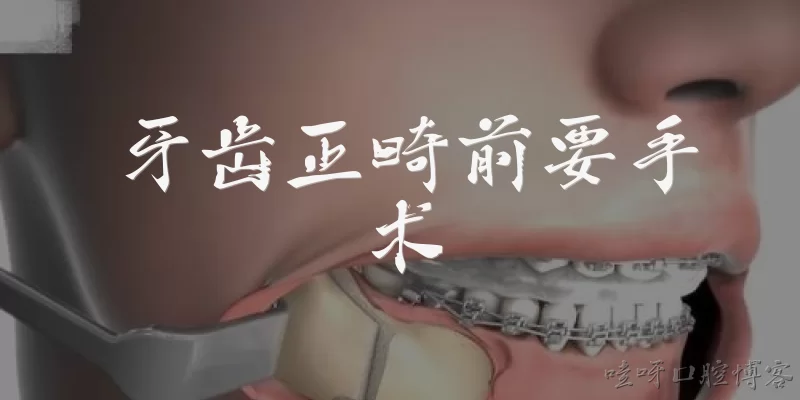
Dialogue about
Common scenarios of "Surgery is required before orthodontic treatment"
【Patient】 医生,我最近想矫正牙齿,但听说有些人需要先做手术,这是真的吗?
【Orthodontist】 是的,对于某些严重的错颌畸形,比如骨性龅牙或地包天,单纯戴牙套效果有限,需要正颌手术配合正畸治疗。
【Patient】 那怎么判断我是不是需要手术呢?
【Orthodontist】 需要拍X光片、取模型,进行头影测量分析,评估牙齿和颌骨的关系。如果主要是骨骼问题,手术的可能性就大。
【Patient】 手术听起来很可怕,具体是什么手术?
【Orthodontist】 正颌手术通常是在全麻下,对上下颌骨进行截骨、移动和固定,以改善咬合和面部轮廓。现在技术成熟,风险可控。
【Patient】 那手术和正畸的先后顺序是怎样的?
【Orthodontist】 一般是先正畸,把牙齿排列整齐,为手术做准备;然后手术移动颌骨;术后再继续正畸调整咬合。整个过程大约需要1.5到2年。
【Patient】 手术后恢复期要多久?会影响生活吗?
【Orthodontist】 术后需要住院几天,之后有2-4周的流食和软食期,避免剧烈运动。完全恢复需要几个月,但大多数人能正常生活和工作。
【Patient】 手术有什么风险吗?
【Orthodontist】 任何手术都有风险,比如出血、感染、神经损伤等,但发生率低。选择经验丰富的医生和正规医院可以大大降低风险。
【Patient】 那费用大概多少?医保能报销吗?
【Orthodontist】 正颌手术费用因地区和医院而异,大约3-8万不等。部分费用可能医保报销,但正畸费用通常自费。具体要咨询当地医保政策。
【Patient】 如果不做手术,只戴牙套,会有什么后果?
【Orthodontist】 对于骨性问题,单纯正畸可能只能稍微改善牙齿倾斜,无法根本解决颌骨不调,咬合功能和面部外观改善有限,甚至可能复发。
【Patient】 我有点害怕,需要多长时间考虑?
【Orthodontist】 不用急,你可以多咨询几位专家,了解自己的情况后再决定。我们也会详细解释方案,帮助你做出选择。
【Patient】 好的,那我先去做检查,谢谢医生。
【Orthodontist】 不客气,早点检查,我们根据结果制定最适合你的治疗计划。